Posts

Showing posts with the label #AEE412

My Final Presentation

Image
My Final Presentation: Here is the video of my final presentation. It was a lot of hard work getting myself to where I am today. I am grateful to be officially done with my fall semester and look forward to working with so many people. As this chapter closes the next one opens up which will be me as the Student Teacher at Cumberland Valley High School. To Be Continued . . .

Welcome to My Classroom

Image
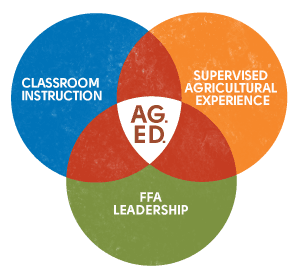
Weekly Investments: Classroom Management  This weeks prompt is in one of my personal favorites: Classroom Management. And by that I mean one of the things that makes everyone in the cohort worry a tad.   As an Agriscience Teacher we fill three roles at once in our classroom (Instructor, Mentor, Coach) and as a teacher in my opinion that is a little different than compared to other teachers.  Thinking back on my summer reading I remember that classroom management isn't something that works the same way for everyone.  Classroom management is in my opinion something that varies based upon the students in the classroom.   Classroom-Instructor  SAE - Mentor FFA Leadership - Coach Looking at classroom management I think the essential is to establish expectations in which the students buy into.  Looking around my cooperating classroom I noticed right away that Ms Romberger has classroom expectation posters on her one wall.  Here they...

Micro Teaching Unit Reflection

Image
Micro Unit Reflections Where to begin with this one . . . This experience made me realize that I really am excited to be teaching.  During my time with this experience I wrote notes as I taught on ideas and personal feedback in preparation for teaching. George's In Micro Teaching Reflective Lists Don't Set Yourself Up To Have a Bad Time  Something I learned getting ready for this week is that as a guest lecturer, don't give students the chance to do stuff which the teacher in the room won't see.  For example it may be a fun idea for them to put fun facts in the inside but be prepared for some crazy facts.  Instead have them share it with the class.  The self contained peer pressure of "keeping it appropriate" will help your students succeed and keep you own sanity. Consumable Supplies Cost  Even though everyone in the dairy industry would disagree when it comes to supplying your room with products to be used, I panicked slightly when I th...

Lab Reflections: Inquiry on Inquiry

Inquiry on Inquiry Based Instruction One of the big concept we were introduced to this year as a teaching strategy was inquiry based instruction.  Inquiry based instruction and inquiry based learning is something that I always thought I would want to implement in my classroom. My problem I can count the number of inquiry based lesson I have led in my career on one hand prior to this year.  My first real opportunity to teach inquiry based learning was on #DSA2017 where I taught an inquiry based lesson on nutrition.   But this is now the final stages to student teaching prep. And as always we should be experts with all of this. So here are my reflections on my first official teaching experience with Inquiry Based Instruction. Gems What am I suppose to do!!!!!  Like for real this entire lesson my major take away was: "Wow, as a teacher I'm not doing a lot. I'm just standing here."  I kind of liked it but also didn't like it. The entire time I was s...

How do we utilize inquiry based learning in our classrooms?

Image
Essential Question: How do we Utilize Inquiry Based Learning in our Classroom? For the next two weeks Penn State #PSUAgEd18 will be exploring inquiry based learning.  From my personal understanding Inquiry Based Learning (Inquiry Base Instruction) is a pedagogical approach which main goal is to make the students the driver of learning and the teacher more of a facilitator.   So instead of this: Leading to this: Students Response We as teachers are encouraged to change up the lesson. Thinking about my high school experiences some of my favorite classes were the Project Lead the Way Classes - Why? They utilized inquiry based and problem based learning. Inquiry Based Learning is to Problem Solving Approach as Squares are to Rectangles Much like how all squares are rectangles but not all rectangles are squares: all inquiry lessons are also PSA but not all PSA lessons are inquiry lessons.  With problem solving approach you have steps an...

Lab Reflections: Surprise Lab

Image
Lab Reflection: Surprise Lab I believe that a disclaimer is needed for this lab: I was not a fan of this lab walking out of class on Monday, the way the lab was presented I was not a fan of. I understand the importance of the lab though. Sometimes you have to create a lesson on the fly to reteach something or re-examine a lesson.  Its important to be flexible in your labs.  I think that my main problem was how the lab was presented and how we still had other things that needed to be done as well that week, this lab jumped up above other things that were going to take time to accomplish. As a result I think I started thinking about this lab pretty negatively. Monday's Reaction The surprise lab was suppose to make us think: the students didn't fully understand a concept, or a new topic is sparking their interest, or something is going on in the world right now that maybe something not planned needs to be taught tomorrow.  Its a topic that I think is very important...

Problem Solving Approach Lab Reflection

Image
Lab Reflections: Problem Solving Approach Problem: How do you demonstrate a problem solving approach lab in just 20 minutes?  Keeping in mind that a good problem solving lesson also has students given prior background knowledge which will make them even more affective learners - I think that my attempts at demonstrating a problem solving approach lab went fairly well.  The lesson I taught in lab was on developing a HACCP Protocol for a food production line. Here was the outline of the lesson: Review of Major Food Hazards Interest Approach - What caused the scenario to occur? Activity 1 - Identifying Hazards in the line Going over HACCP Activity 2 - Identifying Control Points in the line There were aspects of my lesson I was really happy that I did and there are somethings that I saw that told me I need to flesh out some aspects of my classroom. Likes: Interest Approach - I liked how I had the students read a scenario and determine what was the ca...

Weekly Investments: Learning as Problem Solving

Image
Weekly Investment: Learning as Problem Solving Disclaimer: I have already written two blogs on individual learning so instead I thought it would be pretty cool to focus on the second part of the reading Problem Solving as a form of Learning.  If you want to see those two blogs check out these two links: Individualized Learning in a Room of Many Individuals (Part One):  http://fromgreenblazers2bluecorduroysaged.blogspot.com/2017/10/individual-learning-in-room-of-many.html Individual Learning Part Two - Different Ways Of Application:   http://fromgreenblazers2bluecorduroysaged.blogspot.com/2017/10/individual-learning-part-two-different_9.html Learning as Problem Solving Every day we go through self learning. Take for example these blogs that we are writing are a sense of self learning: We write them over the weekends on readings that are our focus in learn for the upcoming week.  Then we write these blogs and are challenged to read each others blogs and deve...

Weekly Investment: Evaluating Learning (Part One)

Image
Weekly Investment: Evaluating Learning (Part One) Scenario: I have one student that I would consider the best in my class. She does great on all assignments and on all tests. She leaves for the summer with an A grade on her report card.  My other student on the other hand is a handful.  He struggles on all assignments, and as a result he walks out with a D grade, which in highschool is still passing so he can continue onto the next grade. Both of these students preform an SAE which has them working at a local nursery part time over the summer.  During my mid year SAE review I sat down with their supervisors to get an idea of where my students were and what I would need to work on to help develop them as students.  The supervisor was not impressed with my A grade students work ethic and ability to work on a team and recommended that she receive a D letter grade. My student which has always struggled in my classroom though was one of the hardest working part tim...

Individual Learning Part Two - Different Ways Of Application

Image
Individual Learning Part Two - Different Ways Of Application  Individualized Teaching is a pretty cool strategy for learning. There are a couple of different ways as a teacher you could include this style of learning into the classroom. Some of the main styles are: Supervised Study Experiments Independent Study Student Notebooks   Sheet Resources Each is similar but also different so here are some notes on each along with resources for more information: Supervised Study This could be one of two things. A mini research paper or could be a Supervised Agricultural Experience. The key here is getting students interested. The best example I have seen are scenario based which could be argued as a Problem Solving Approaches as well. There are six kinds of supervised studies: All students study the same problem using the same reference. All students study the same problem using different references. Small groups ...

Individual Learning in a Room of Many Individuals

Individualized Learning in a Room of Many Individuals (Part One) Reading Chapter 7 of our major textbook of study I can't help but find much of the lessons I am reading to be very relevant and informational for not just me but my peers when it comes to a major topic: Individualized Learning.  First let us define individualized learning: learning through the work of individuals or small groups. This concept differs from group learning because of how it applies the usage. In Group Learning I as the teacher am feeding the information. In individual learning I may give information at the end but in reality it is student driven. The students preform the Learning themselves by working alone or in small groups to solve a problem.  The first question I have to ask is this one: Why Use Individualized Learning? This individualizes the learning It helps students learn to inquire into the subject matter It promotes independence  It helps students learn to make and use more than one o...

Weekly Investment: Problem Solving Approach

Image
Weekly Investment: Problem Solving Approach Problem Solving Lessons are the focus of this week's weekly investment.  To help better understand them as a cohort we have begun looking into different styles of teaching them.  To better understand problem solving approach to lessons let me ask the problem: Why are these kinds of lessons so successful? Problem Solving Lessons are great to introduce topics to students.  For our usage we categorizes problem solving approaches into four categories: Forked Road Multiple Possibilities or Factors Situation to be Improved Effect / Cause Let's expand a little on each: 1. Forked Road We like to use these style questions when there are only two options in a problem.  We also call these "Should I" questions. Questions like this are: Should I Cull or Breed an animal? Should I go to class or not go to class? (A daily challenge for most college students) Should I watch Penn State Football or should I wat...

Weekly Investment: Effective Teaching and Language in Instruction

Image
Weekly Investment: Effective Teaching and Language in Instruction This week we are going to be talking about language in instructions and its effect on teaching.  Thinking back to my internships with extension I new that if I didn't give clear instructions in an activity my students would be 100 % confused and they don't want to learn. So instead I look at blooms taxonomy to create segue questions that I will ask during my lessons. I like the idea of in a unit you ask simple questions first and then scaffold the learning by asking more complex questions later.  To me this works also during a lesson because it helps students build up what they can learn. I know thinking about classes in high school I enjoyed learning progressively. To me to be an effective teacher you have to be willing to alter the questions you ask. You have to change up the style and types.  I really liked the University of Florida Article we read this weekend.  It reminded me that dependin...